The Unique Challenges of Trimming Little Fingers
Trimming the nails of a newborn baby or an active toddler is one of the most nerve-wracking milestones for new parents. Infant nails are paper-thin, soft, and flexible, yet they grow astonishingly fast and can produce razor-sharp edges that lead to facial scratches. Because a baby's nail bed is intimately fused with the underlying fingertip tissue, using adult-sized clippers poses a real risk of accidental nicks.
This comprehensive guide details the safest pediatric-approved trimming routines, tool recommendations, and tips for introducing fun, harmless nail art to older kids.
Stage 1: Newborns (0 to 3 Months)
During the first month of life, a newborn's nails are so closely bonded to the hyponychium that clipping with bladed scissors is discouraged by many pediatric nurses.
- Use an Emery Board: A gentle, ultrafine-grit baby nail file or electric infant buffer with cushioned rotating pads is the safest choice. Simply file in one direction along the curvature of the finger.
- Best Timing: Trim when your infant is in deep REM sleep or immediately following a warm bath when nail keratin is pliable.
- Lighting Matters: Always ensure you have bright, direct task lighting so you can clearly distinguish pink skin from translucent nail tip.
Stage 2: Toddlers (4 Months to 3 Years)
As children begin exploring textures, crawling, and eating finger foods, their nails become firmer. Regular trimming every 3 to 5 days is essential to prevent dirt buildup and bacteria transfer.
- Press the Finger Pad Back: When positioning the clipper, use your thumb to pull the baby's finger pad downward and away from the nail. This creates clear clearance and guarantees the blade only clips the free nail edge.
- Cut Straight Across for Toenails: While fingernails can be gently rounded to follow fingertip shape, toenails must always be trimmed straight across to eliminate the risk of painful ingrown toenails.
- Smooth Sharp Corners: Always finish with a quick sweep of a fine file to eliminate pointed corners.
Playful Dress-Up: Introducing Safe Nails for Young Girls
Little girls love mimicking older siblings and parents by playing with colorful nail art, cartoon motifs, and dress-up accessories. However, adult manicures, acetone removers, and chemical glues should never be used on young children.
If your child wants fun cartoon nails for a birthday party, school performance, or festival dress-up:
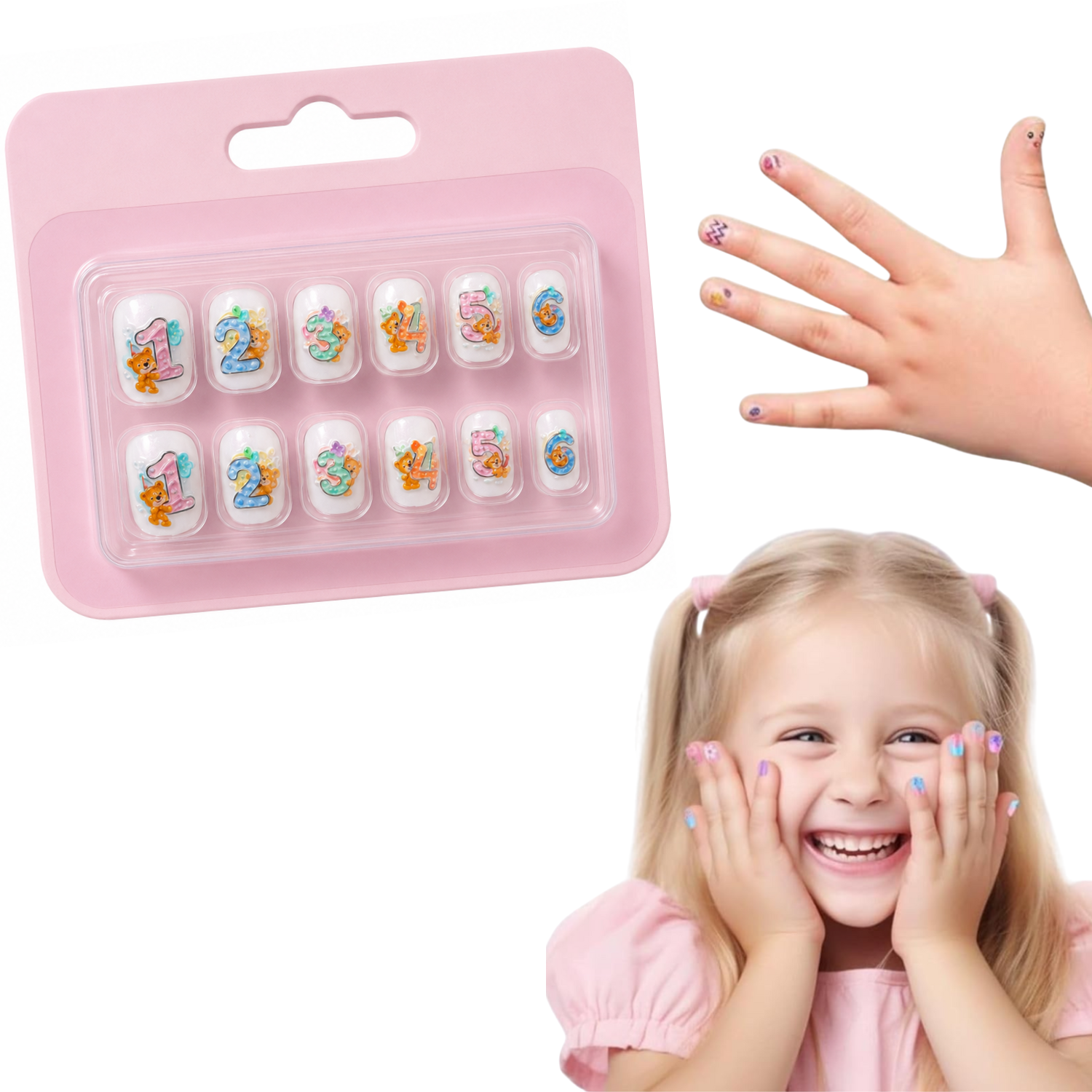
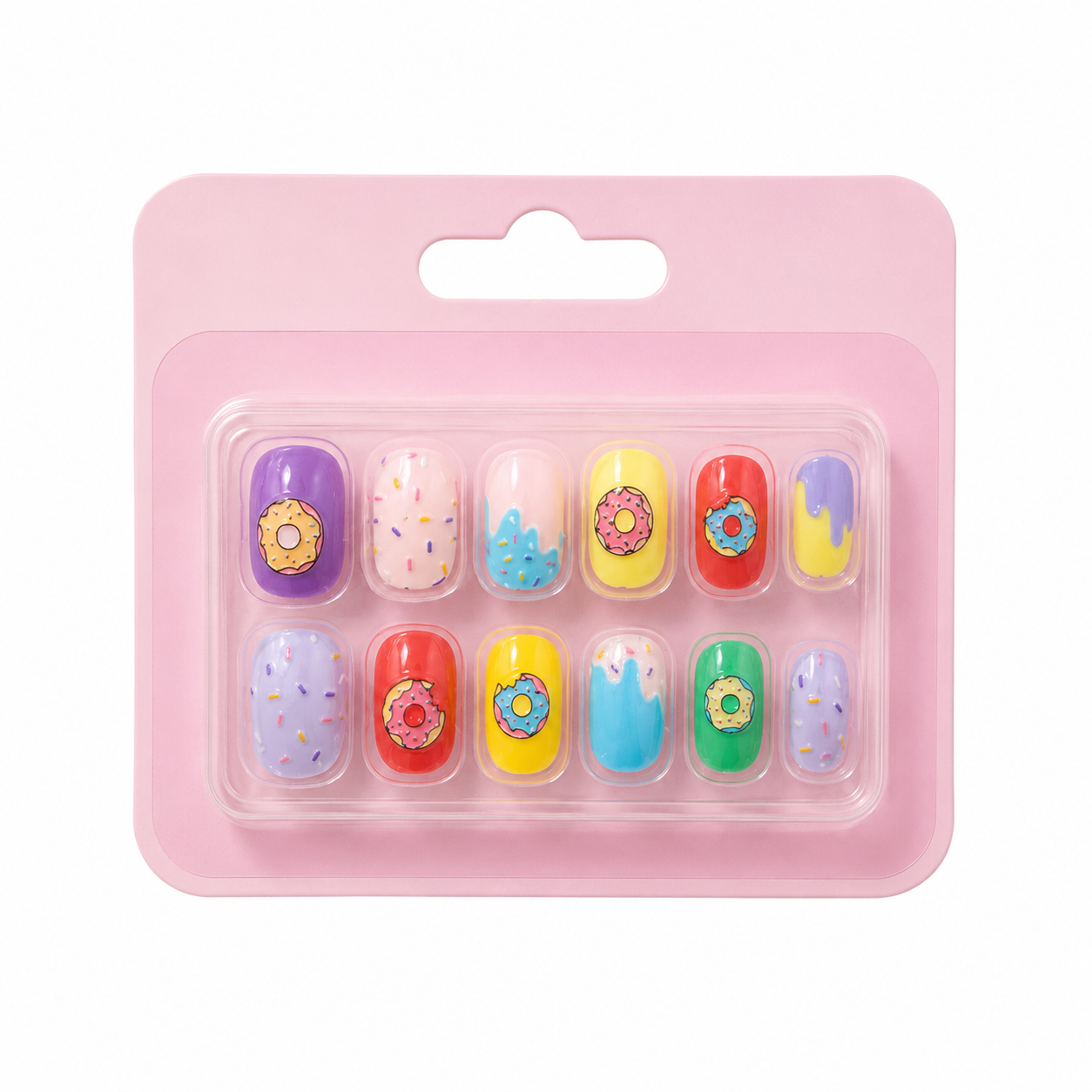
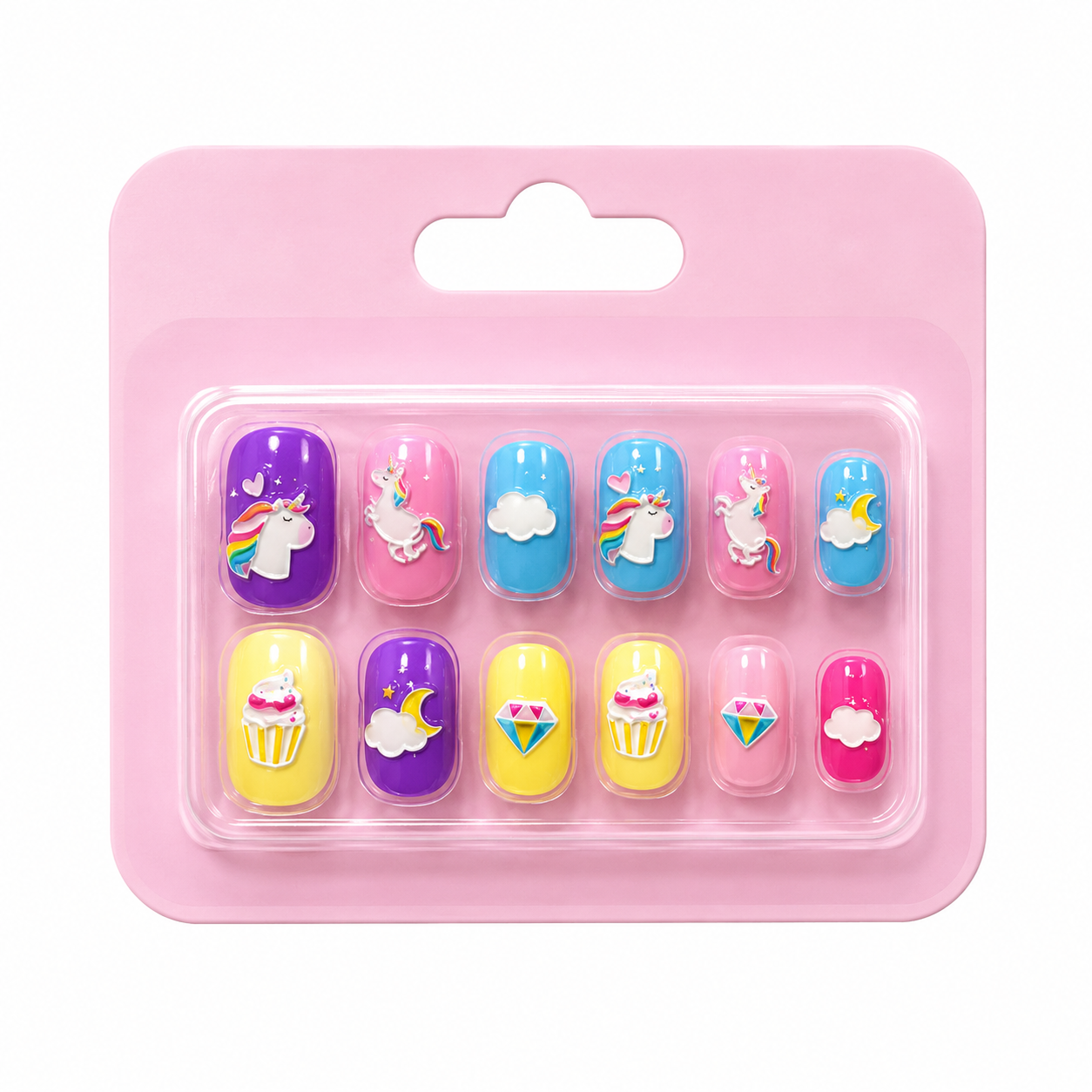
- Choose Pre-Glued or Tab-Based Sets: Always select children's press-on nails that feature pre-applied water-based adhesive tabs or soft jelly stickers. These adhere lightly to the nail without chemicals.
- Short Lengths Only: Opt for petite, short-square shapes that do not extend past the fingertip, ensuring the child can play, write, and eat comfortably.
- Painless Peel-Off: Safe children's press-on nails peel off effortlessly in warm water without requiring harsh acetone or solvents.