The Challenge of the Modern Compact Kitchen
Whether you reside in a high-rise urban apartment or an older home with compact cabinetry, kitchen countertop space is universally prime real estate. The kitchen is the beating heart of the home, yet between blenders, spice jars, cutting boards, cooking oils, and daily snacks, countertops quickly succumb to overwhelming clutter.
When cooking surfaces are crowded, preparing meals becomes stressful, ingredients get lost in the back of deep cupboards past their expiry dates, and cleaning up feels like a monumental chore. Fortunately, smart spatial organization does not require costly architectural renovations. By applying professional organizing principles, you can unlock up to 40% more functional surface space.
1. Capitalize on Vertical & Window Real Estate
The single biggest mistake homeowners make is thinking purely horizontally. When you place canisters and spice jars flat on your counter, each item claims a unique footprint. Look upward instead:
- Suction & Window-Mounted Canisters: Smooth tile backsplashes, window panes, and refrigerator flanks are vast expanses of wasted space. Heavy-duty vacuum-suction canisters allow you to suspend spices, coffee beans, or teas directly on the window or glass splashback without drilling holes or damaging rental properties.
- Two-Tier Risers: Placing tiered shelving over corner countertops doubles usable storage instantly, keeping oils and salt cellars elevated off the prep counter.
2. The Power of "See-Through" Decanting
Commercial food packaging comes in mismatched shapes, loud cardboard colors, and chaotic advertising graphics. When multiple plastic bags of pulses, dry fruits, and snacks sit on a shelf, they create immense visual noise.
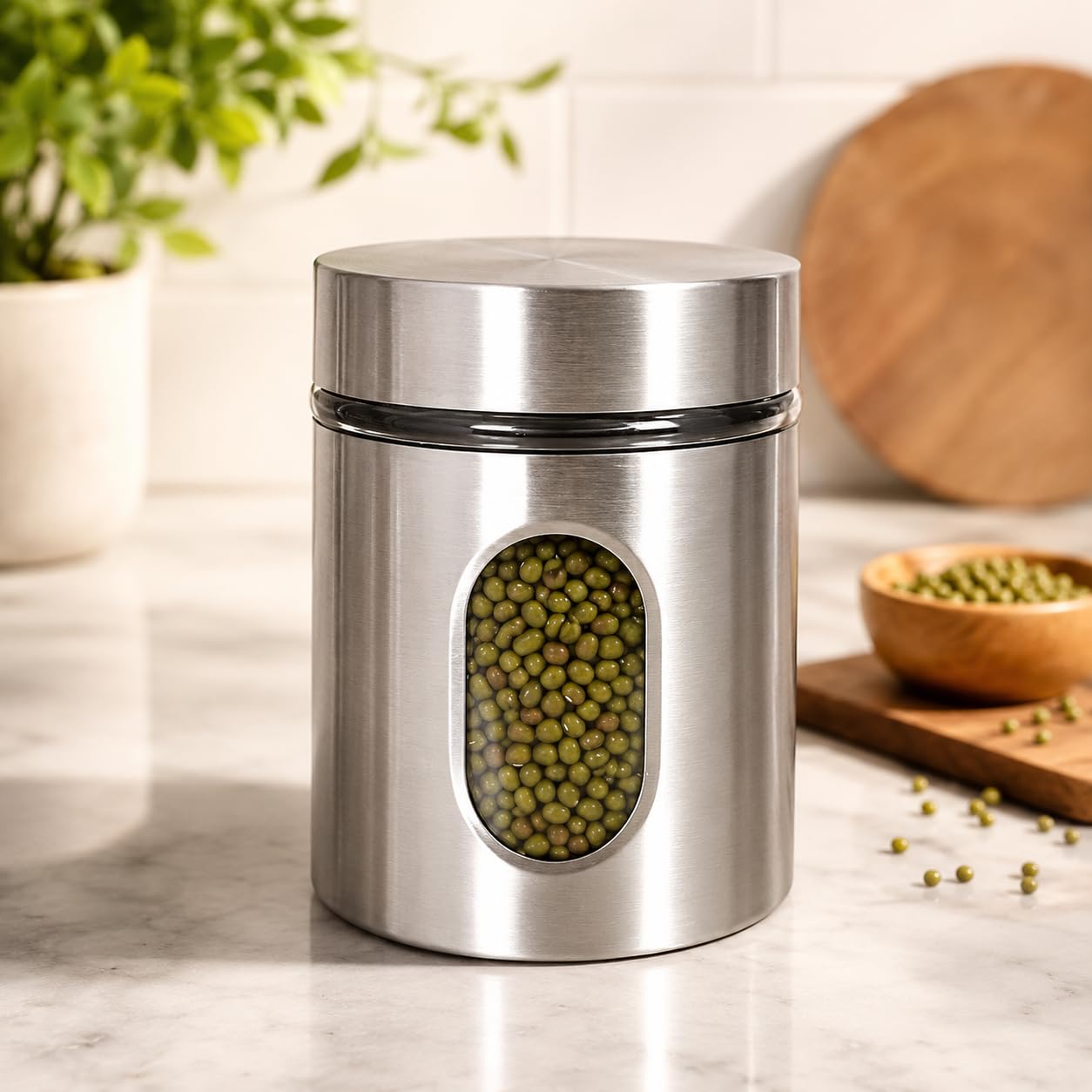
Decanting dry essentials into uniform, transparent glass or clear high-grade containers creates immediate visual serenity. Furthermore:
- Instant Inventory Tracking: You know at a glance when almond, sugar, or tea supplies are running low before starting a recipe.
- Pest & Moisture Protection: Airtight silicone seals protect dry provisions from pantry pests, humidity, and staleness far better than rolled-up plastic bags clamped with clothespins.
3. Consolidate Snacks with Divided Organizers
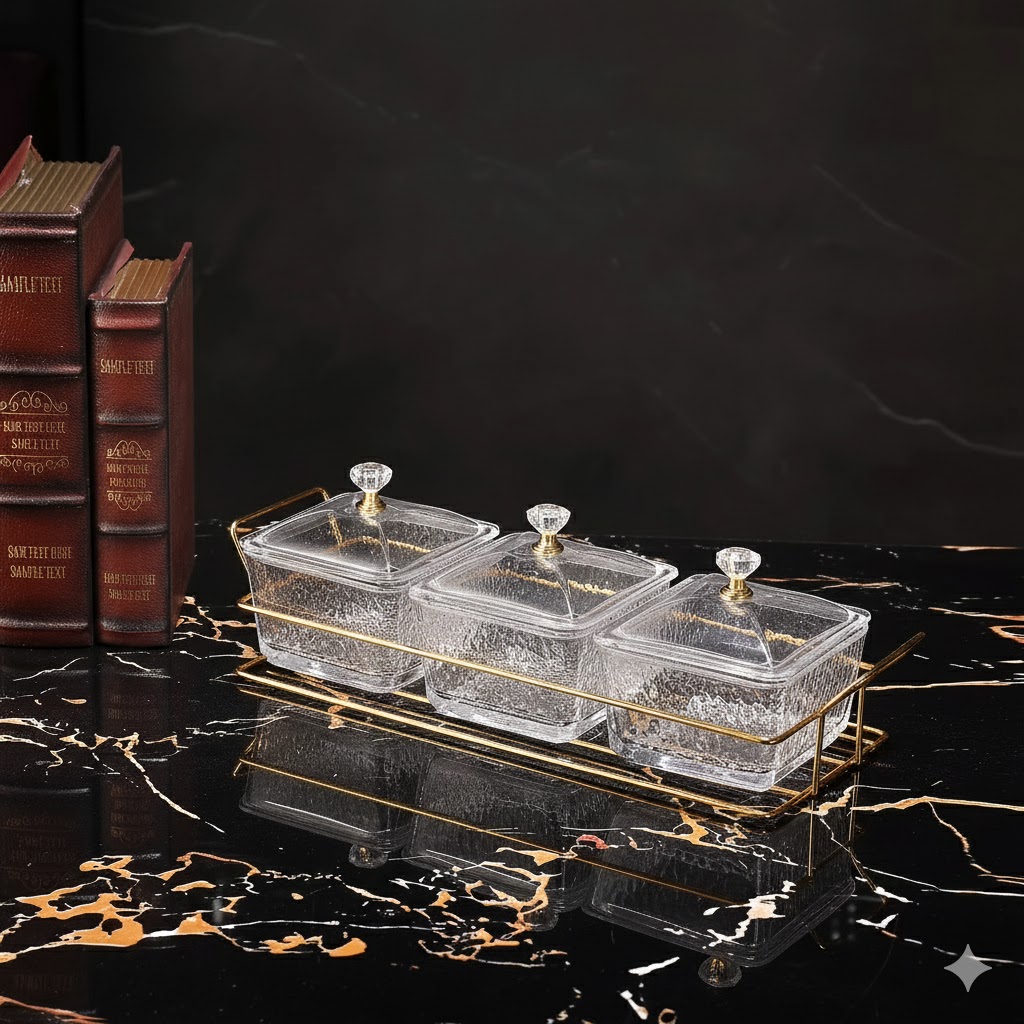
Instead of having four separate jars for almonds, walnuts, raisins, and cashews occupying space across your dining or coffee table, use a multi-compartment serving tray with a fitted lid. A compact 3 or 4-section transparent tray keeps varied snacks organized in a single elegant footprint, ready to serve to unexpected guests or enjoy during family evenings.
4. The "One-Touch" Prep Zone Rule
Keep only the items you use daily within arm's reach of your cooking stove. Salt, pepper, high-heat cooking oil, and your primary prep spoon should live together on a small wipeable ceramic tray. Anything used less than twice a week belongs inside upper or lower cabinet storage.